

Buyer's Guides, Tech Gadgets
Generator vs Portable Power Station: Which Is Better for an Outage?
Oct
Short answer: Choose a battery power station for quiet, portable backup of compatible smaller loads, and consider a correctly sized fuel generator for sustained heavy loads when you have a safe outdoor operating location. Neither is universally best. The right choice depends on your equipment’s wattage, the outage duration, and how you will recharge or refuel.
We operate The SUP Desk and include products from our catalog where useful. This is an educational buying guide, not an independent laboratory product review. Safety recommendations are based on official guidance.

The most important difference is stored electricity versus making electricity
Battery power stations store electricity in rechargeable cells and deliver it through USB ports, DC outputs, or an inverter for household AC devices. Once the stored energy runs out, the battery needs another source for recharging. A fuel-powered generator converts fuel to electricity while its engine is running. With suitable fuel and maintenance it can support substantial loads over extended periods, but it creates exhaust, noise, and ongoing operating costs.
Many devices marketed as “solar generators” are really battery power stations that can be recharged from a compatible solar panel. They do not generate power without the panel and sunlight, and panel output varies with conditions. When evaluating any system, ask not only what it can deliver right now but how you will replenish that energy on the second day of an outage.
Watts, watt-hours, surge and efficiency explained
Watts measure the instantaneous electrical power a device consumes or a supply can deliver. Watt-hours measure stored energy or energy used over time. A station rated for 300 watts of AC output cannot necessarily power an appliance requiring 500 watts continuously, regardless of battery size. A unit with 250 watt-hours of usable energy could theoretically supply a 25-watt load for around ten hours, but conversion losses and other factors shorten real runtime.
Motor-driven appliances such as refrigerators and pumps can draw a short startup surge above their normal running consumption. Compare the generator’s or inverter’s continuous rating with the load’s normal draw and its surge rating with startup demand. Check whether the maker gives rated battery capacity or usable AC-output capacity. If you do not know a particular appliance’s wattage, measure it with a compatible energy meter or consult its manufacturer rather than making a purchase based on its plug shape.
Which option is better for a brief neighborhood outage?
For several hours of internet, lighting, phone charging, or laptop use, a battery power station can be attractive because it is quiet, portable, and does not create carbon-monoxide exhaust while discharging. It often works without any special home wiring when individual devices are plugged directly into its supported outlets. This can be particularly practical for apartments or homes where an engine generator cannot be located safely.
A small battery may not operate appliances that need substantial starting power, however, and batteries still require safe storage and charging. A fuel generator becomes more compelling if your needs include a well pump, power tools, larger appliances, or sustained heavy loads. The convenience trade-off is that you must find a safe outdoor location, store fuel appropriately, manage cords, and maintain the equipment before the next outage.
When a gasoline generator is a better fit
A generator is worth considering when one outage could last several days and your measured essential load is too large for a reasonably priced battery. Many homeowners want to run refrigeration, fans, sump pumps, multiple chargers, or parts of a heating system. Depending on size and transfer equipment, a generator may serve some of those uses. It cannot automatically power an entire house, and poorly matched equipment can trip or fail to start a motor load.
Gasoline engines need periodic maintenance and appropriate fuel storage. Propane or dual-fuel alternatives have different operating and storage trade-offs. Fuel availability after storms is uncertain, so calculate realistic fuel consumption and a safe storage plan. Never run any combustion-powered generator in a garage, porch, carport, shed, basement, or other enclosed or partly enclosed area, regardless of open doors or windows.
Generator carbon-monoxide safety is nonnegotiable
The Centers for Disease Control and Prevention advises placing portable generators outdoors at least 20 feet from doors, windows, and vents. Exhaust should face away from occupied buildings. Open windows, fans, and partially open garage doors cannot make indoor engine operation safe. Every household using a fuel generator should have working battery-operated or battery-backup carbon-monoxide alarms and understand symptoms such as headache, dizziness, weakness, and confusion.
Use appropriately rated outdoor extension cords and follow manufacturer guidance for rain, grounding, and transfer equipment. Never try to power house wiring by plugging a generator into a regular wall receptacle, which can energize utility lines and create serious hazards. A qualified electrician can advise on a compatible transfer switch or inlet. Consult the CDC’s official generator safety guidance before choosing where to place a unit.
What a 300W portable power station can and cannot do
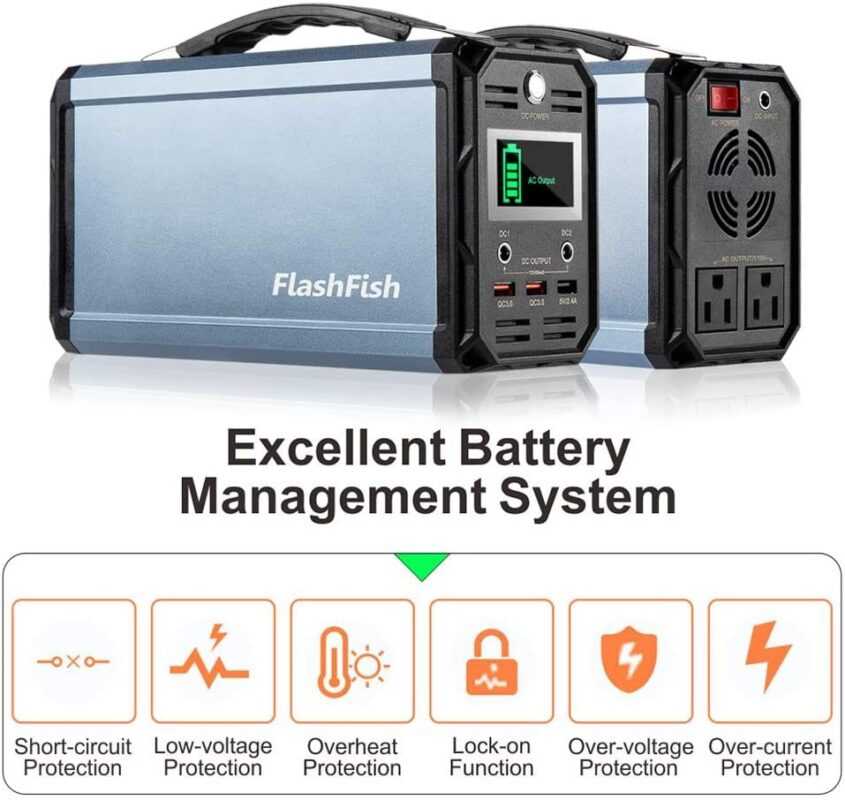
The SUP Desk lists a 300W portable power station suitable for shoppers comparing compact emergency power options. A 300W continuous output rating tells you the approximate maximum simultaneous load, not how long a battery lasts. The listing also advertises a milliamp-hour capacity; do not translate that to wall-outlet runtime without knowing the battery’s nominal voltage, watt-hour rating, and inverter efficiency.
This size category may be helpful for low-demand electronics, lamps, and selected small appliances, provided each device is compatible with the actual outputs. It is generally the wrong starting point for whole-home backup, space heating, air conditioning, electric kettles, or many refrigerator installations. Before using any medically necessary powered equipment, consult that equipment’s manufacturer and healthcare professional about power quality, surge needs, reliability, and safe backup plans.

How to build a realistic essential-load worksheet
Make a table with each device, its running watts, its startup watts if relevant, and the number of hours you expect to use it. For example, a hypothetical 12-watt router operating for ten hours uses 120Wh, an 8-watt LED lamp for six hours uses 48Wh, and a 60-watt laptop for two hours uses 120Wh. Together that is about 288Wh before allowing for inverter losses, charging inefficiency, and reserve.
Do not assume the label’s highest wattage equals the device’s average power across the whole period. Refrigerators cycle on and off, and televisions change draw with brightness and settings. For higher-value purchases, measure actual use over 24 hours with a suitable meter. This turns “I need backup power” into a measurable specification that can be compared with a manufacturer’s rated battery energy and AC output.
Refrigerators, freezers and cold food during outages
A refrigerator presents two challenges: the brief compressor starting surge and its variable energy use. A small battery may fail to start a compressor even when its running watts seem modest. After startup, hot weather, opening the door, ambient temperature, and appliance efficiency affect total demand. A dedicated chest freezer, newer fridge, and older refrigerator can have very different requirements.
Preserving food is also about safe temperatures, not keeping the compressor running every second. Keep appliance doors closed when possible and follow food-safety guidance during prolonged outages. If refrigeration is a priority, obtain the appliance’s measured energy use and starting specifications and buy a station or generator with room for both. Do not rely on an unsupported claim that any 300W portable station will operate a household fridge overnight.
Solar panels: helpful during a long outage, but not magic
A compatible solar panel may extend the usefulness of a power station by replenishing some of the energy consumed. The advertised panel wattage is measured under standardized test conditions; actual output depends on sun angle, shade, cloud cover, panel temperature, and charging-controller limitations. A 100W panel rarely supplies exactly 100 watts for all daylight hours.
Look at the station’s solar input voltage and current range, connector, and maximum accepted wattage. Exceeding electrical input limits can damage equipment, while a mismatched connector may simply prevent charging. For long storms with heavy cloud coverage, plan a backup method rather than relying solely on solar. Portable panels are attractive for camping and emergency preparedness, but their output should be budgeted conservatively.
Battery chemistry, lifespan and temperature
Portable power stations can use different lithium battery chemistries and battery-management systems. Their expected cycle life, size, cost, and charging characteristics differ. Verify the exact chemistry and safety certifications stated for the model you are considering rather than assuming a familiar product name guarantees the internal cell type.
A battery should be stored and recharged according to the manufacturer’s specified temperature range. Leaving it in a hot car, exposing it to flooding, or using a damaged charger can create risks. Keep vents clear and inspect the case and cords before use. If a battery swells, overheats, emits unusual odor, or shows other damage, stop using it and follow official handling guidance. Emergency equipment should be checked periodically instead of forgotten in storage for years.

Transfer switches, extension cords and what not to connect
Portable power stations are often designed for individual plug-in appliances; some larger models or professionally installed systems can integrate into home backup arrangements. Do not assume your portable unit can be connected directly to household wiring. Plugging any source into an ordinary household receptacle risks dangerous backfeeding unless a properly designed and installed transfer or interlock system is used.
Extension cords need the correct current rating, insulation type, length, and routing. Long, undersized cords increase voltage drop and heat. Keep connections dry and prevent trip hazards. Because generators operate outside while many appliances are inside, cord safety can be a major practical difference from using a quiet battery station placed indoors. Follow the equipment manuals and use licensed electrical help for permanent connections.
Noise, fuel, maintenance and actual ownership cost
A battery system’s major costs are usually the initial equipment, eventual battery aging, and electricity used to recharge it. Solar panels and adapters can add cost. A fuel generator adds fuel, oil, periodic service, and potential storage or transport needs. The price per watt on the box overlooks these costs and the value of quiet operation when people are sleeping nearby.
Plan for the situation you will actually face. If power fails during a hurricane and filling stations are closed, the ability to obtain fuel may become the limiting factor. If there is little sunlight, the solar panel may recharge slowly. A practical emergency plan considers more than a single ideal operating day and more than the lowest purchase price.
Three buyer profiles: apartment, family home and rural property
Apartment resident: Quiet battery power for phones, a router, and lighting can be a sensible starting point where combustion equipment cannot be safely operated. Check building rules and avoid overloading extension cords. Suburban homeowner: A mixed approach may serve small devices quietly while a properly sized outdoor generator covers larger appliances during prolonged outages.
Rural property owner: Well pumps, septic equipment, and long outage duration may dominate the calculations. Start by listing motor surge demands and the electrical arrangement, not by choosing a station based on advertised charging ports. An electrician may be needed for safe integration. The right equipment depends on the actual critical loads and the ability to refuel or recharge during an emergency.
A simple decision framework before spending money
First define an outage duration and a non-negotiable list of devices. Next measure their power and energy requirements. Third eliminate units that cannot handle continuous power or startup surge. Fourth evaluate whether you can recharge or refuel safely, including poor weather and neighborhood access. Fifth calculate the complete purchase and maintenance costs. Last, test the system before relying on it for a storm or winter outage.
That process may lead you to a compact station, a higher-capacity station, a fuel generator, or a combination. It can also reveal that a smaller kit is enough if you reduce optional loads. Prioritize household safety and reliable essentials over marketing labels like “solar generator,” “whole-house,” or “emergency ready” without a supporting load calculation.
Frequently asked questions
Can I use a battery power station indoors?
Battery power stations do not produce combustion exhaust while discharging, which makes them suitable for many indoor portable-power applications when operated according to the manufacturer’s instructions. That does not mean they are completely risk-free; keep ventilation openings clear, use compatible chargers, and avoid moisture, heat, and damaged cells. Fuel generators must never be operated indoors or in enclosed or partly enclosed spaces.
Does a 300W generator provide 300 watts for a full hour?
The 300W figure normally refers to continuous output capability. Runtime depends on the battery’s stored watt-hours, usable discharge limits, inverter efficiency, and the actual connected load. Without a verified watt-hour rating, it is not possible to calculate a dependable runtime. Confirm the exact product specifications rather than equating watt and watt-hour values.
Can a battery power station run a microwave?
Many microwaves draw substantially more input power than their cooking-watt rating and can require an inverter well above the capacity of small portable stations. Confirm the microwave’s input rating and the station’s surge and continuous AC output. For short periods, energy capacity may be manageable, but power output often becomes the barrier.
What happens when the power station runs out?
Its outputs normally shut down or become unavailable until sufficient charge is restored. Recharge options may include wall power, compatible solar panels, or vehicle charging, depending on the product. A station cannot provide unlimited power merely because it has a solar-input socket. During an extended outage, available sunlight and accepted charging wattage govern how quickly it can recover.
Can I run a refrigerator overnight?
Only after checking actual compressor startup demand, average energy consumed over the intended period, the inverter’s output and surge capabilities, and the station’s usable battery capacity. Refrigeration needs vary by appliance, temperature, and door openings. A small 300W station is often inadequate; never rely on an unverified seller promise for food safety or medically essential refrigeration.
Is a dual-fuel generator better than a gasoline-only model?
A dual-fuel generator provides flexibility if it is designed and rated for both fuels, but output can differ depending on fuel type. Storage, access, operating costs, and local fuel availability matter. It still emits harmful exhaust and must operate outdoors under the same safety rules. Compare manufacturer specifications for each fuel rather than assuming one rating applies identically to both.
How far should a fuel generator be from my house?
CDC guidance says outdoors at least 20 feet from doors, windows, and vents, with exhaust facing away from the home. Depending on placement, wind, and building geometry, additional separation may be wise. Do not place it inside a garage with the door open. Use properly installed carbon-monoxide alarms in the home and follow the manufacturer’s guidance.
What should I buy first if my budget is limited?
Begin with essential-load measurements and an emergency plan. For phones and small electronics, a compact battery may be enough. If your home needs a well pump or large appliance, do not spend your whole budget on a station that cannot start it. You may find it more economical to reserve funds for an appropriately sized system than to buy several unsuitable devices.
Are solar generators actually silent?
The battery discharges without a combustion engine, so these devices are far quieter than fuel generators. Many stations still run cooling fans during high output or charging, and some emit electronic noise. Do not assume complete silence under every load. If noise is important, look for tested fan behavior at your expected power draw.
What should I check on a product listing?
Look for independently verifiable watt-hour capacity, continuous watts, surge capability, outlet voltage, supported solar input, charging time, battery chemistry, operating temperature, warranty, and included accessories. Use exact model identifiers. For products with incomplete specifications, contact the seller before buying rather than guessing from a photograph or a milliamp-hour figure.
Our buying recommendation
Make the smallest purchase that can reliably power your real essential loads for the required duration. If you need only a modest emergency backup for compatible gadgets, compare the compact 300W portable station at The SUP Desk. If your energy calculations are much higher, investigate verified larger units and their recharge requirements, including the store’s higher-capacity solar-generator listing, which should be checked for the exact current package. Do not buy based only on the word “generator” in the title.
Sources
CDC guidance for using fuel generators safely; U.S. Consumer Product Safety Commission generator hazards; manufacturer manuals for your exact appliances, generator, and portable battery. Check electrical and installation instructions for your equipment and never backfeed household wiring.