

Buyer's Guides
Steep-Hill Mowing Guide: Sliding Tractors, RC Mowers and Safer Options
Oct
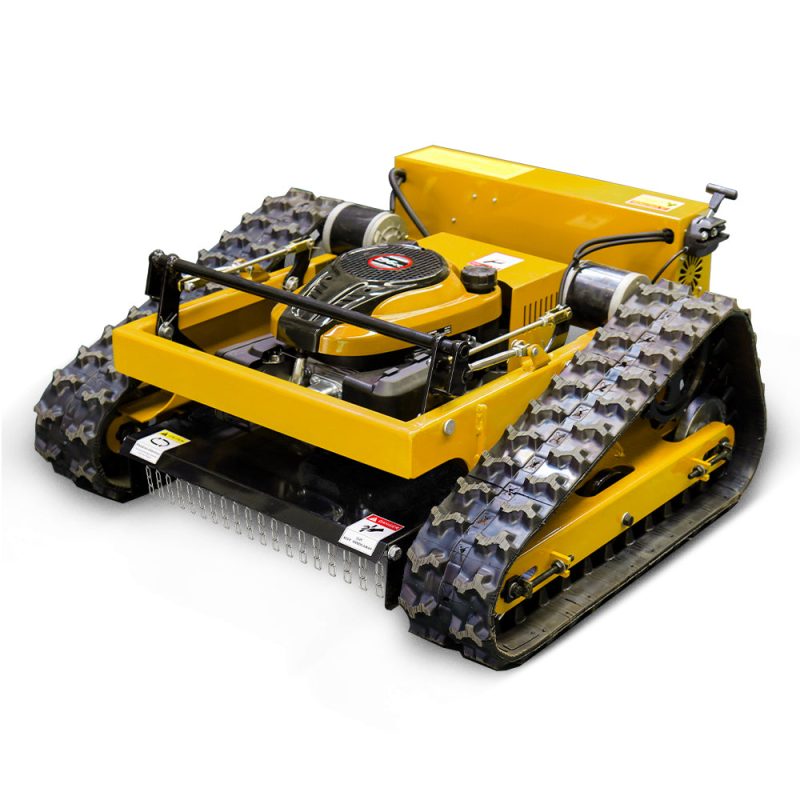
The MMS MS550J is currently listed at $2,499. Its suitability depends on the site and verified operating instructions; an advertised slope figure is not approval for your hillside.
Quick answer: If a tractor or riding mower slides on a hill, stop using it on that section. Repeatedly changing direction or adding speed does not establish safe operation. Compare professional steep-slope maintenance, a suitable remote-controlled machine, less intensive vegetation management and changes to the landscape. Choose after evaluating the terrain, not after choosing the machine.
This guide is for owners deciding how to maintain difficult ground. It is not a procedure for recovering a sliding tractor or operating on a particular slope. Follow the exact machine manual and obtain a qualified site assessment when the hazards are uncertain. The SUP Desk sells the linked mower; this is buying guidance rather than a field-tested safety certification.
Sliding is a stop-work signal
A machine can lose traction before the operator expects a problem. Wet grass, loose soil, leaves, ruts and sudden changes in angle can turn a familiar route into an uncontrolled slide. Braking and steering depend on available traction. A slope that was mowed once without incident has not thereby been demonstrated safe under different conditions.
If the machine is already unstable, do not improvise recovery instructions from a shopping article. Keep other people clear and seek professional help appropriate to the situation. Before any future mowing, establish the equipment’s operating limits, the direction-specific restrictions and the site’s hazards. Operator experience does not cancel the consequences of a rollover, projectile or loss of control.
Measure the slope and understand the units
Degrees and percentage grade are different. Grade percentage is vertical rise divided by horizontal run, multiplied by 100. A 100-percent grade corresponds to 45 degrees, not 100 degrees. A 20-degree slope is approximately a 36-percent grade. Confusing the units can lead to a seriously unsuitable equipment purchase.
A qualified assessment should consider the steepest local section rather than only the average angle across the yard. Ruts, drainage channels and transitions can create sharper local tilt. A phone measurement from one comfortable standing point is not a full survey of a hazardous site. Record the terrain and access requirements, then compare them with the exact manufacturer’s restrictions.

Compare four ways to manage steep ground
| Approach | When it can make sense | What to investigate |
|---|---|---|
| Specialist contractor | Hazardous slopes, infrequent clearing or uncertain access | Insurance, experience, equipment and safe work plan |
| Suitable RC tracked mower | Repeat work within documented operating conditions | Manual, fail-safe, traction, service and operator training |
| Alternative vegetation management | Areas that do not need lawn-height turf | Local plants, erosion, access and environmental restrictions |
| Landscape redesign | Recurring mowing presents unacceptable risk | Drainage, engineering, permits and long-term maintenance |
A low purchase price is not enough to make a machine the best option. A contractor may be less expensive than buying equipment for two difficult cuts a year. Conversely, a suitable machine with reliable parts support can be worthwhile for frequent work on accessible ground. Compare total ownership cost and risk exposure over several seasons.
What remote control changes
A remote-controlled mower allows an operator to control the machine without sitting on it. That can reduce direct exposure to a ride-on rollover when used within a proper work plan. It does not make every standing location safe. The operator must remain outside the machine’s possible travel, slide and debris paths while maintaining effective observation.
Do not stand downhill merely because the remote has a long advertised range. Bystanders, pets and vehicles also need exclusion from the work area. A remote machine can throw objects, cross a boundary or continue moving unexpectedly if its control system fails. Understand its emergency stop and signal-loss behavior before considering any difficult terrain.
Tracks improve some conditions, not all conditions
Crawler tracks distribute contact differently from tires and may improve traction on suitable ground. They cannot guarantee grip on wet clay, algae, loose stones or unstable edges. A tracked machine can still slide, overturn or become stuck. Track condition, tension, debris and ground contact all influence performance.
Think about the terrain beneath vegetation. Thick weeds can conceal rocks, wire, irrigation components and holes. The first cleanup may need a different approach from routine mowing of known ground. Do not infer brush-clearing capability from a lawn-mower photograph. Ask what vegetation diameter, density and height the manufacturer allows and what conditions invalidate its slope claims.
Read the MS550J specifications as a verification checklist
The SUP Desk lists the MMS MS550J with a nominal 550mm cutting width, gasoline engine, electric start, remote control and rubber tracks. The listing advertises cutting-height adjustment from 10 to 150mm and up to 45-degree slope capability. Those are retailer-listed details. We have not independently verified that slope rating or obtained site-specific approval for your property.
Confirm the manufacturer’s manual for the delivered model, engine variant, safe directions of travel, lubrication limits, allowed surface conditions and maintenance. A slope claim may depend on direction, attachments or ground preparation. If supporting documents do not explain the rating, do not treat the number as a safe operating target. Ask for written answers before paying.
Engine lubrication limits can differ from traction limits
A mower might have enough traction to climb a section while its engine or other components are operating outside their approved inclination. An engine’s lubrication system, fuel supply and cooling must work in the permitted position. The whole machine’s restrictions matter, including those of the installed engine. Do not substitute a generic engine family’s specification for the actual engine.
Ask which limit controls when the engine manual and mower advertisement differ. Until the manufacturer resolves a discrepancy, use the more restrictive documented instruction. Avoid modifications intended to overcome limits without engineering approval. A more powerful engine or extra weight can change balance, braking and component loads rather than simply making a machine safer.

Remote range is not a safe working distance
Radio range usually describes communications under particular conditions. Terrain, buildings, vegetation, interference and controller battery condition can change it. A machine may be within radio range while hidden behind a crest or tall grass. Reliable control requires the operator to observe what the machine is doing and see emerging hazards.
Request the manufacturer’s minimum exclusion distances and operating-position rules. Learn how the remote indicates low charge, disconnection or a fault. A backup controller is not a substitute for a working fail-safe. If the seller cannot explain whether blade and travel functions stop after signal loss, resolve that before choosing the machine for remote work.
Inspect the property before each mowing session
Conditions change between visits. Look for recent erosion, saturated soil, animal holes, dumped objects, branches, exposed roots and damaged fences. Check access paths and the landing area at the bottom of the slope. Identify roads, windows, neighboring property and occupied areas that could be struck by debris or a moving machine.
Plan how to keep other people out while work is underway. A sign alone may not prevent a child or pet from entering. Avoid scheduling work when traffic or nearby activity makes exclusion impractical. If you cannot establish a controlled area and a safe observation position, hiring a specialist or changing the maintenance method may be the appropriate decision.
Consider access, transport and storage
A machine that fits the slope may not fit the gate, trailer or storage space. Confirm overall dimensions and actual operating weight, including fuel and accessories. Loading introduces another set of hazards. Use the manufacturer’s transport instructions, suitable rated equipment and a securement plan rather than assuming the mower can simply drive up any available ramp.
Also establish how a disabled mower would be retrieved without placing someone on hazardous ground. Routine belt, blade and track service should be possible in a safe maintenance area. If the only way to service a stuck machine is to stand in its potential slide path, the ownership plan is incomplete even before the first cut.
Compare ownership costs with a contractor
At the checked $2,499 listing price, the MS550J is a significant purchase. Add suitable transport, fuel, protective equipment, routine servicing, blades, belts, track wear, storage and any professional setup. Confirm whether shipping, unloading requirements and taxes affect the delivered total. Ask who supplies replacement parts and how long critical parts normally take to arrive.
For a contractor comparison, obtain a quote for the same area, vegetation condition, frequency and debris handling. Ask whether the contractor can safely reach all sections or will leave some unmanaged. A cheaper quote covering only easy access is not equivalent to a complete steep-ground maintenance plan. Reliability and a clear scope matter as much as the hourly rate.
A practical purchase-acceptance checklist
Before accepting the machine, verify its model identification, supplied manuals, engine details, controls and delivered accessories against the order. Inspect for transport damage and confirm supported fuel, oil and charging instructions. Check warranty terms, return conditions and the procedure for reporting a defect. Keep serial numbers and delivery records.
Arrange initial setup and training in a suitable controlled level area following the manual. Verify emergency stopping and signal-loss procedures using the manufacturer’s approved method. Do not conduct an improvised high-risk test on the steepest bank. Resolve unfamiliar noises, faults or unexpected movement before any work on slopes. Training and acceptance are separate from proving that a particular hillside is suitable.

When changing the landscape is the better investment
Repeated mowing may be unnecessary if the objective is erosion control or an orderly appearance rather than walkable lawn. Suitable groundcover, native vegetation or a different maintenance schedule can reduce the need to put machinery on steep ground. Get local advice because soil, drainage, fire risk, invasive plants and wildlife habitat affect the choice.
Major grading or terracing requires appropriate engineering and permission where applicable. Poorly planned earthwork can make runoff and instability worse. Compare the ongoing cost of vegetation management with the long-term cost of a properly designed change. The safest recurring task is sometimes the one the landscape no longer requires.
Frequently asked questions
Does a 45-degree advertisement mean my 40-degree hill is safe?
No. Advertised capability does not establish your surface condition, travel direction, edge stability, engine limit or exclusion area. Obtain the exact machine’s manual and supporting rating conditions, and have the site assessed when necessary. A margin below a headline number is not a substitute for that information.
Can I mow wet grass if the machine has tracks?
Do not assume so. Tracks can still lose grip, and wet ground may be unstable beneath the grass. Follow the machine’s restrictions and postpone work when conditions are unsuitable. A successful dry-weather cut does not validate wet-weather operation on the same route.
Is an RC mower autonomous?
Not necessarily. A remote-controlled machine is operated through its controls; autonomous navigation is a separate capability. The MS550J should not be purchased on the assumption that it maps boundaries or avoids people automatically. Confirm the exact functions in the supplied documentation and maintain the required supervision.
Can it cut saplings and heavy brush?
Only if the manufacturer explicitly approves the vegetation and operating conditions. A cutting-width measurement does not specify brush capacity. Dense stems, hidden wire and rocks may damage blades or become projectiles. For an initial overgrown cleanup, ask a specialist whether different equipment is required before buying a routine lawn mower.
Should I repair the tractor instead?
A maintenance fault should be addressed, but a mechanically sound tractor can still be unsuitable for a particular slope. Ask a qualified dealer to distinguish equipment condition from site limitations. Do not assume replacing tires, adding ballast or changing implements authorizes operation where the manual prohibits it.
Buy only after the site and machine match
If documentation and a site assessment support a remote tracked mower, compare the MMS MS550J listing, current price and supplied equipment. Use our rough-terrain mower guide for additional purchasing questions. If the match remains uncertain, request professional vegetation management rather than experimenting with a machine on hazardous ground.
Safety sources and specification status
The OSHA landscaping resources provide general equipment and workplace hazard guidance; they do not certify this mower or property. Use the delivered mower and engine manufacturers’ manuals as the operating references. Price, product identity and gallery images were checked against The SUP Desk’s product record on October 30, 2026. The advertised slope and performance figures remain unverified claims and are identified as such.