

Buyer's Guides, Drones
DJI Mini 5 Pro Beginner Guide: Batteries, Rules and First Flights
Oct
The current SUP Desk price is $1,250. Controller, battery type and regional configuration matter more than a headline flight-time figure.
Quick answer: The DJI Mini 5 Pro can be a capable first camera drone for a beginner who wants aerial photography and will practice carefully. It is a costly choice for someone who only wants to experiment with flying. Its automated features reduce some workload, but they do not replace judgment, legal compliance or the ability to land manually.
This guide separates manufacturer specifications from realistic beginner expectations. It is retailer buying guidance, not a hands-on flight review. The SUP Desk sells the linked product. We checked the store price and DJI’s published specifications on October 30, 2026; use the live product page for the price and selected package at checkout.
What the Mini 5 Pro actually offers
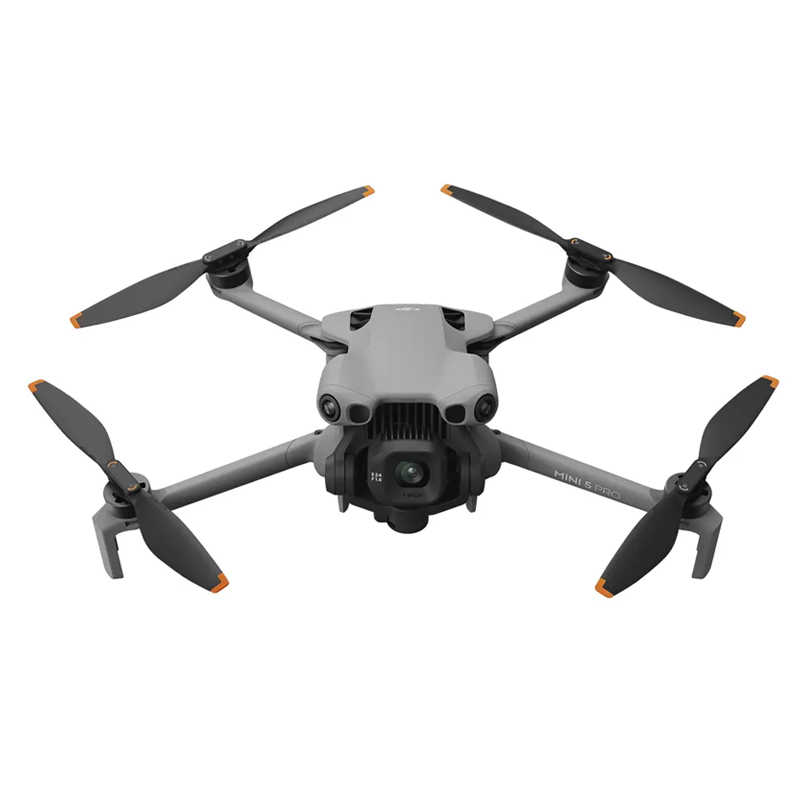
DJI lists a 1-inch CMOS camera sensor with 50-megapixel effective pixels, a 24mm-equivalent lens and an f/1.8 aperture. Its video options include 4K recording and high-frame-rate slow-motion modes. These specifications are useful for landscape photography, travel films and deliberate camera movements, but good results still depend on light, exposure, composition and editing.
The sensing system combines omnidirectional binocular vision with forward-facing LiDAR and a downward infrared sensor. That is assistance, not a protective bubble. DJI specifies operating conditions for these systems, including lighting and surface requirements. Fine branches, wires, moving objects and difficult surfaces deserve conservative clearance even when the screen appears to show an unobstructed route.
Resolve the 36-minute versus 52-minute claim
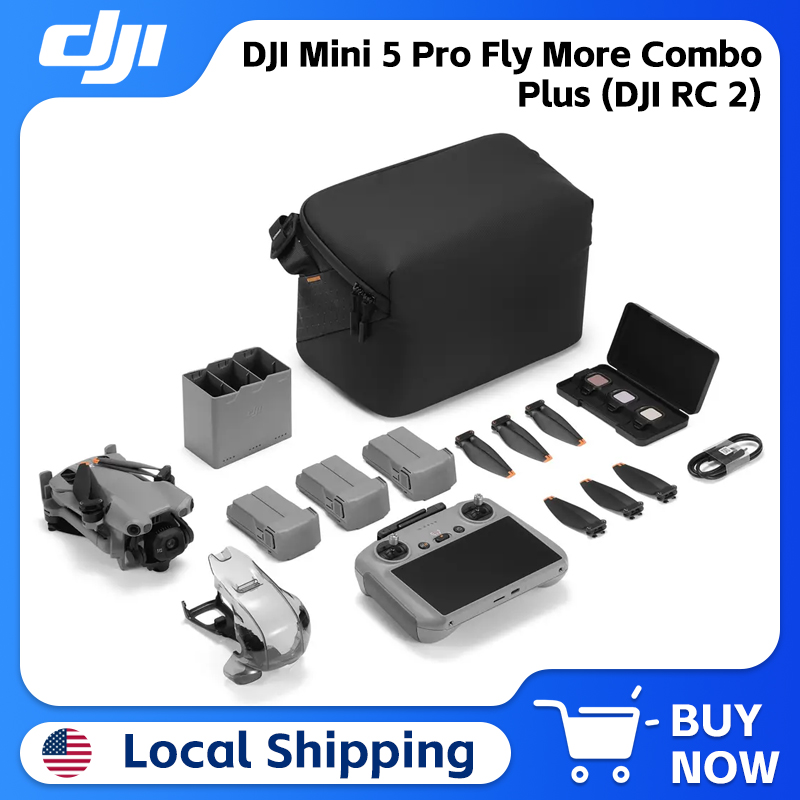
DJI publishes a maximum flight time of 36 minutes using the standard Intelligent Flight Battery and 52 minutes using the Intelligent Flight Battery Plus. Both figures come from controlled test conditions. They are not guaranteed filming sessions, and they do not mean a beginner should remain airborne until the battery is empty. Wind, temperature, maneuvering and the return journey reduce practical time.
The SUP Desk listing uses a 52-minute headline, so confirm whether the selected order actually includes the Plus battery. Ask for the battery’s exact name rather than assuming every Fly More package is identical. Plan landings with a comfortable reserve, and revise that plan when wind or distance makes the return more demanding than the outward flight.
Do not assume every unit is below the registration threshold
DJI lists takeoff weight at approximately 249.9 grams with a stated variation of plus or minus 4 grams. That matters when a legal threshold is 250 grams. Accessories and battery choice also matter. The manufacturer specifically warns buyers to check local requirements and notes that the Plus battery changes relevant European and UK class-related operating conditions.
For the United States, the FAA says recreational drones weighing 250 grams or more require registration. Aircraft operated under Part 107 must be registered regardless of weight. A store label saying “sub-250g” is not a final determination for your actual configuration. Verify the aircraft, fitted battery and accessories, then check the current rules for the operation you intend to conduct.
Learn the U.S. basics before the first launch
Recreational pilots must take TRUST and carry proof of completion. They must follow the applicable recreational requirements, give way to other aircraft and keep the drone within visual line of sight as required. Controlled airspace requires prior authorization where applicable; an app showing a location on a map is not itself permission to fly there.
The FAA describes flying at or below 400 feet in uncontrolled Class G airspace under the recreational exception. Temporary restrictions, emergency activity, land-management rules and takeoff-site restrictions can still prevent a flight. Registered aircraft generally need compliant Remote ID unless an exception applies. If the purpose is business or otherwise falls outside the recreational exception, investigate Part 107 rather than assuming a small drone is exempt.
Compare a premium camera drone with cheaper ways to learn
| Option | Why choose it? | What to accept |
|---|---|---|
| Mini 5 Pro | You already want strong aerial imaging and a compact travel setup | Higher purchase and repair exposure while learning |
| Less expensive GPS camera drone | You want basic photography and positioning assistance | Compare camera quality, support and sensing carefully |
| Small indoor trainer | You want inexpensive stick-control practice | Different handling and limited outdoor camera usefulness |
| Simulator | You want repeated control practice without aircraft damage | It does not reproduce every wind, battery or real-world judgment problem |
Choose by intended use rather than buying the cheapest device with a similar-looking body. A toy drone with no dependable positioning is not an equivalent substitute for a GPS camera drone. Equally, someone who dislikes piloting may not benefit from an expensive camera system. An introductory session with an experienced pilot can clarify that decision before purchase.
Choose the controller and phone workflow deliberately
Some controllers require a compatible phone, while screen-equipped controllers provide a different setup. Confirm the exact supported controller, DJI Fly requirements, cable connection and operating-system compatibility for the selected package. A controller photograph is not enough. Check that your phone can install and run the supported app and has adequate storage for transfers.
A built-in screen can reduce phone setup, but it does not remove the need to understand maps, aircraft status, warnings and firmware. Practice finding the battery information, home point, return-to-home settings and flight-mode controls while the aircraft is safely on the ground. Do not make the first flight a simultaneous lesson in menus and piloting.
A first-flight location should be boring
Choose a lawful, open area in calm weather, away from people, roads, water, trees and overhead lines. A beautiful waterfront or crowded park can be a poor classroom. Look for a clear landing surface and enough room to stop a mistaken movement without reaching an obstacle. Obtain any necessary permission for the location and check airspace immediately before flight.
Inspect the aircraft and propellers, charge the controller and battery, check firmware and confirm the home point. Keep spectators away from the launch area. If the aircraft, app or battery reports a problem, resolve it on the ground. A first launch should test a known setup, not determine whether a damaged propeller or unexplained warning is harmless.
Practice three short sessions before filming a trip
Session one: Take off, hover at a modest height, make small movements and land. Learn how the controls feel with the aircraft facing away, then rotate slowly. Orientation changes can make left and right feel reversed. Keep the aircraft nearby and stop when concentration drops, even if substantial battery remains.
Session two: Fly a slow square, stop at each corner and return manually. Practice controlled descents and understand the selected flight mode. Identify the safest landing area before every movement. An experienced observer can help spot hazards, but assistance does not transfer the pilot’s responsibility.
Session three: Add simple camera movements only after flight control feels familiar. Record a short forward reveal or gentle sideways movement with a clear escape path. Review the files afterward. Check horizon, exposure, movement speed and whether the intended scene is actually visible. This is more useful than attempting an automated tracking shot on the first battery.
Return-to-home is a procedure to learn, not a rescue promise
Read DJI’s current manual for the selected aircraft and firmware. Understand how the home point is established, what triggers return-to-home, how the aircraft responds to a lost connection and how battery status affects its choices. Review obstacle behavior and the return route. Set applicable parameters to suit the location rather than copying a number from an unrelated flight.
A safe return height at one location can be inappropriate near controlled airspace, trees or overhead structures elsewhere. Do not assume return-to-home can reliably navigate every wire or narrow gap. Practice the supported procedure in a clear area with adequate reserve, and learn how to cancel it or land manually when the manual permits.
Wind changes the return journey
A drone can travel away from you easily with a tailwind and struggle coming back against it. Wind can be stronger above the ground and around buildings than it feels at your feet. Do not treat a published resistance rating as a target for novice operations. Start in mild conditions and maintain a short, uncomplicated return route.
If wind rises, prioritize a safe return and landing over finishing a shot. Keep track of battery use and avoid exploring far away just because the video link remains clear. Transmission-distance specifications describe test conditions, not permission to fly beyond visual line of sight. Local law and actual conditions govern the flight.
Buy accessories that solve a real problem
Useful items may include a supported memory card, spare propellers, approved batteries, a suitable charger and a protective case. Confirm exact compatibility rather than buying an accessory because it says “Mini.” Different drone generations can use different parts. Accessories can also change aircraft weight and handling, so include them in your compliance check.
Neutral-density filters are a later creative tool, not a prerequisite for learning to hover. Propeller guards can affect weight and operating limitations and must be approved for the exact setup. Avoid unsupported payloads. Budget for replacement parts and possible service, because the purchase price is only part of owning a camera drone.
Travel and business use need separate planning
A drone legally operated at home may be restricted at a destination. Check the destination aviation authority, customs requirements, protected areas and local takeoff rules. Do this before buying a nonrefundable activity or packing the aircraft. Airline battery carriage rules also require attention, including spare-battery protection and cabin-baggage requirements.
For business footage, investigate the applicable pilot certification, registration and operating rules before accepting a job. Real-estate work, social content and promotional filming can involve additional obligations even when the aircraft is small. Also plan privacy, permission and liability. A client asking for a shot does not make an unsafe or prohibited flight acceptable.
Frequently asked questions
Is obstacle sensing enough to prevent crashes?
No. Sensors have operating limits, and automation cannot anticipate every hazard. Thin objects, poor light and difficult surfaces can create problems. Keep generous separation, maintain awareness of the whole route and learn the manual controls. Choose a simple flight that remains safe even if an automated feature behaves differently from your expectation.
Will I get 52 minutes from every battery?
No. DJI associates 52 minutes with the Intelligent Flight Battery Plus under controlled conditions. The standard battery is listed at 36 minutes under its test conditions. Actual use varies. Confirm the included battery and plan a reserve for the return and landing rather than using either maximum as an operational target.
Does its size mean no registration or training?
No. The actual weight, fitted accessories, country and purpose of flight matter. In the United States, recreational pilots still need TRUST. Registration and Remote ID requirements require their own checks, and Part 107 registration applies regardless of weight. DJI’s stated weight tolerance makes assumptions based only on a product headline particularly unwise.
Can I use it straight from the box on vacation?
Allow time for setup, supported updates, app checks, registration where needed and several practice flights. Check destination rules separately. You should already know the battery behavior, file workflow and return procedure before relying on the aircraft for an important trip. Carrying a drone is easier than finding a lawful, suitable place to fly it.
Should a beginner buy the Mini 5 Pro?
Consider it if you are committed to photography, can afford the complete setup and will learn conservatively. Choose a cheaper learning route if the budget is stretched or your interest is uncertain. Premium imaging features are useful when you can operate safely and consistently; they do not make rushed first flights worthwhile.
Final buying checklist
Before ordering, confirm the controller, battery type, charger, memory-card requirements, regional configuration and applicable support coverage. Then verify the lawful places where you expect to practice. Review the DJI Mini 5 Pro listing for the current $1,250 offer and ask for clarification where the package is unclear. For ground-level travel filming without flight planning, compare our Insta360 X3 buying guide.
Sources
DJI Mini 5 Pro official specifications provide the camera, sensing, weight and battery-dependent maximum flight-time details. The FAA recreational-flyer requirements explain TRUST, registration, airspace and Remote ID. Check those primary sources again before flying; regulations and firmware behavior can change.